Sunk at Cowes Roads
HMT Arctic Pioneer FY164 is sunk by enemy air attack outside Portsmouth Harbour. The notes record seventeen killed and eighteen survivors picked up.
Ship history · 27 May 1942 to 26 August 1947
HMT Arctic Pioneer was sunk by enemy air attack at Cowes Roads in 1942. The vessel was later cleared, salvaged, rebuilt and returned to Hull as Arctic Viking H452, but the exact date she was first raised is not yet documented in the research.
One connected episode
The old timeline split the story into two neat entries: the Arctic Pioneer was sunk in 1942, then raised, rebuilt and renamed in 1947. The research is more subtle than that. The 1947 date is firm for rebuilding, remeasurement, return to Boyd Line and registration as Arctic Viking, but it is not yet documented as the date she first came off the seabed.
The notes suggest that the vessel was refloated because the wreck was blocking one of the harbour entrances. If that is correct, it is likely she was raised or moved well before the 1947 restoration. That point should be treated as a reasoned inference from the research notes, not as a proven date.
The safer combined story is this: HMT Arctic Pioneer was sunk at Cowes Roads on 27 May 1942; the wreck later had to be cleared or refloated; after the war Boyd Line repurchased the salvage; repairs and restoration work were carried out, including work at Southampton and West Hartlepool; and in August 1947 she returned to Hull registration as Arctic Viking H452.
Cowes Roads
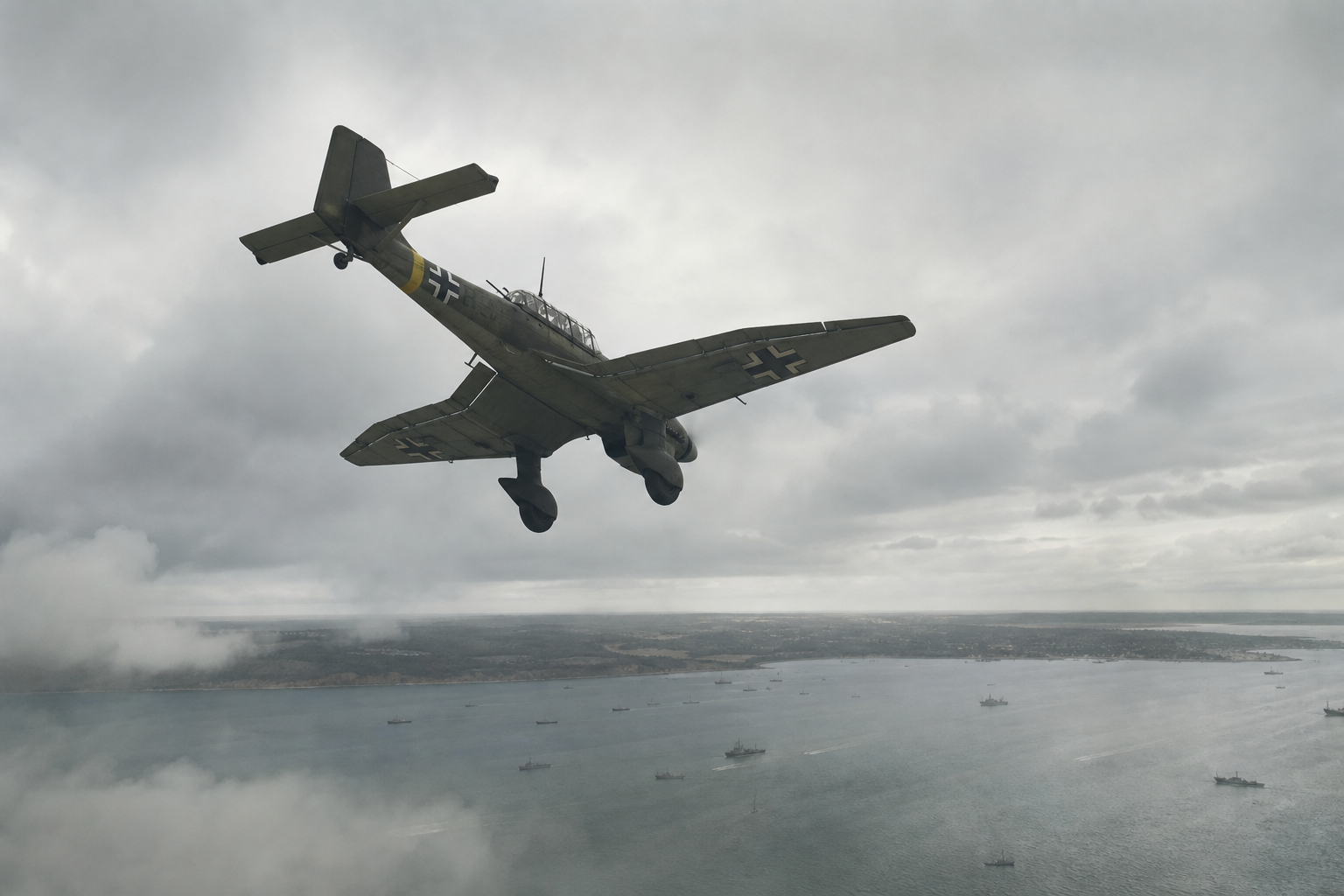
By 1942 the Arctic Pioneer was serving as HMT Arctic Pioneer FY164, a requisitioned anti-submarine trawler. The ship history notes place her at Southampton with the 26th Anti-Submarine Group, then at Cowes Roads when she was attacked.
The strongest research note describes the event as enemy air attack: a bomb from a German Ju 87 Stuka dive bomber struck and sank the vessel in Cowes Roads, outside Portsmouth Harbour, on 27 May 1942. The National Archives reference in the vault is listed as ADM 358/3016: “HM Trawler Arctic Pioneer: 27 May 1942; sunk by enemy action, air attack.”
The human cost was severe. The vessel notes record seventeen crew killed and eighteen survivors picked up. The casualty material in the vault includes named Royal Naval Patrol Service men and burial notes, with several linked to Haslar Royal Naval Cemetery.
Some secondary notes preserve conflicting explanations for the sinking, including collision or mine theories, but the research page should lead with the documented air-attack account while acknowledging that older references have not always told the story consistently.
The salvage question
The present research does not yet provide a firm date for when Arctic Pioneer was first raised or moved after the 1942 sinking. That absence matters. Saying “raised in 1947” risks making the later rebuild date do more work than the source can support.
One research note says the trawler was later re-floated largely because the wreck was blocking one of the entrances into the harbour. A family transcription similarly recalls that the decision was made to float the ship away because it was blocking the harbour. If the wreck was obstructing a navigational channel, clearance would normally have been an urgent wartime or harbour-management matter.
That makes it likely the hull was raised or shifted relatively soon after the sinking, rather than being left untouched until 1947. But “likely” is the key word. Until a harbour authority, Admiralty salvage, dockyard, Lloyd’s, or survey record confirms the date, the page should distinguish between the probable early clearance and the documented 1947 rebuild.
The best current wording is therefore: she was sunk in 1942; she was later refloated or salvaged, probably because she obstructed harbour access; after the war her salvage was repurchased by Boyd Line; and in 1947 she was restored, re-engined, renamed and returned to service.
The important correction is chronological: 1947 documents the rebuild and return, not necessarily the first raising of the wreck.Working interpretation from the Arctic Viking Obsidian research vault
1947 restoration
The 1947 evidence is stronger and more specific. A brief history note says that in 1947 the vessel was salved and repairs were carried out in Southampton, then she was transferred to William Gray & Company Limited at West Hartlepool for restoration.
The same note records that she was re-engined with a triple-expansion engine by Amos & Smith Limited of Hull and converted to burn oil fuel. On completion in August 1947, she was remeasured at 533 gross tons and 203 net tons.
Boyd Line then returned her to Hull service. The owner note says the Arctic Pioneer had been requisitioned during the war, sunk by enemy action, repurchased as salvage by Boyd Line, reconditioned at West Hartlepool, and began sailing again for Boyd Line in September 1947.
On 26 August 1947, she was registered at Hull under the name that would carry her into the final part of the story: Arctic Viking H452. The renaming separates the post-war vessel from the wartime Arctic Pioneer, but it does not erase the continuity of the hull and history.
Combined chronology
HMT Arctic Pioneer FY164 is sunk by enemy air attack outside Portsmouth Harbour. The notes record seventeen killed and eighteen survivors picked up.
The exact date is not yet documented, but source notes suggest the wreck was refloated because it obstructed a harbour entrance.
Boyd Line repurchased the salvage of the former Arctic Pioneer after Admiralty service and wartime loss.
Repairs are recorded at Southampton, followed by restoration at West Hartlepool and new engine work by Amos & Smith of Hull.
The vessel is remeasured after restoration and returned to Boyd Line Limited, Hull.
The former Arctic Pioneer is registered at Hull under her new name, Arctic Viking H452.
Sources used include the Arctic Viking Obsidian research vault notes for HMT Arctic Pioneer FY164, Arctic Pioneer Brief History, Boyd Line Limited, Ministry of Transport Inquiry S459, the Arctic Viking resource note, and David Cressey/G4MQM transcription material. The page deliberately separates documented 1947 rebuilding from the currently undated raising or clearance of the 1942 wreck.