Fishing gear
Large steam trawl winches
The vault notes describe Arctic Pioneer as fitted with large steam trawl winches, essential machinery for hauling gear in the sidewinder trawling trade.
Ship history · Selby · 14 January 1937
Before she was Arctic Viking, she began life as Arctic Pioneer: a new Hull steam trawler launched on the River Ouse at Cochrane & Sons, Selby, for Boyd Line Limited.
Launch day
On 14 January 1937, Arctic Pioneer H452 was launched on the River Ouse at Selby. The Arctic Viking Obsidian research vault records that Miss Barbara Gresham christened the vessel at the Cochrane & Sons Limited yard.
The launch placed the ship at the beginning of a story that would run through commercial fishing, wartime requisition, enemy action, salvage, rebuilding, post-war service and final loss. At the moment of launch, however, Arctic Pioneer represented investment, confidence and modernity in the Hull deep-sea fishing trade.
She was commissioned for Boyd Line Limited of Hull as part of a small group of modern trawlers associated with the same yard and ownership story, including Arctic Explorer and Arctic Ranger. The surviving catalogue material also links the plans of Arctic Ranger, Arctic Explorer and Arctic Pioneer to Cochrane & Sons and the Boyd Line archive.
Back to ship history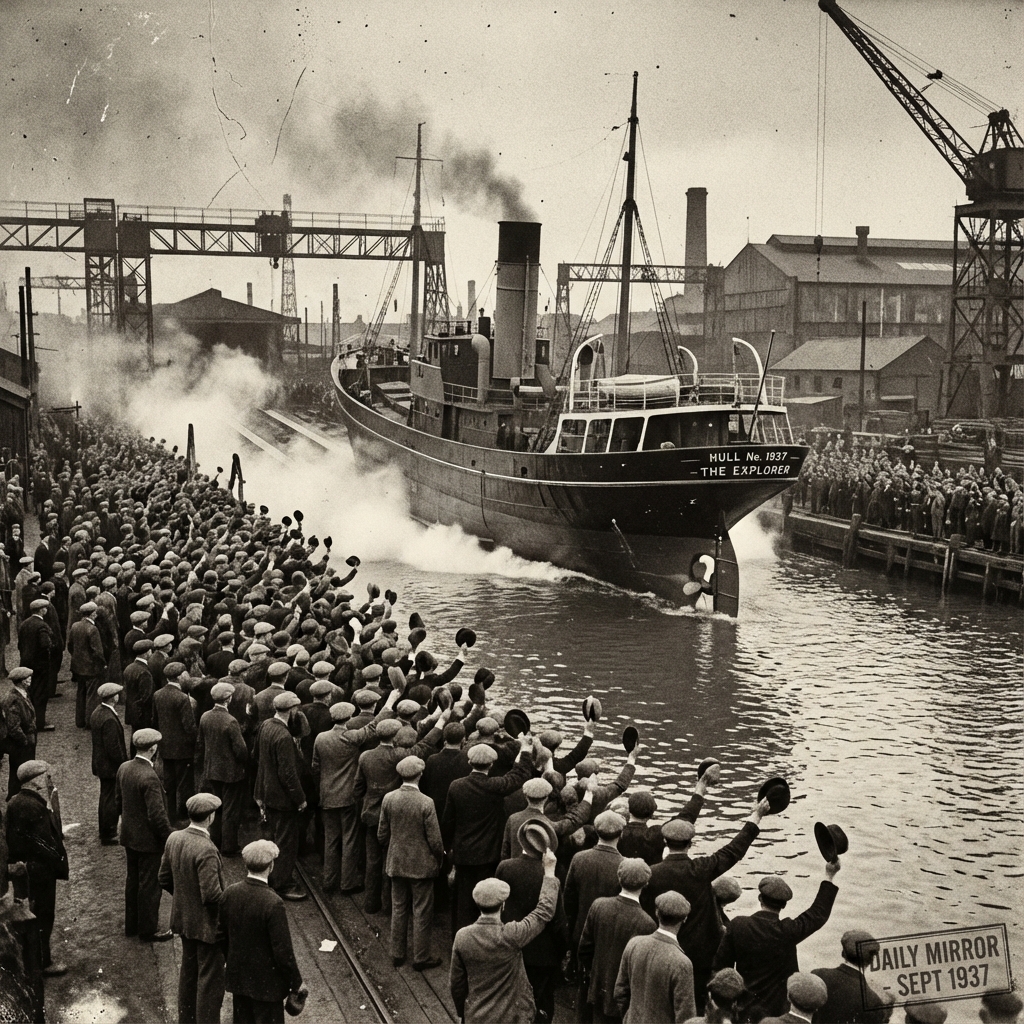
Selby and the River Ouse
Cochrane & Sons built trawlers at Selby on the River Ouse, an inland shipbuilding setting connected by water to the Humber and the North Sea. Arctic Pioneer was launched into the river and then fitted out while afloat.
The surviving notes describe her as the latest type of trawler at the time. Although built away from Hull itself, she was very much a Hull fishing vessel in purpose: commissioned for Hull owners, intended for the distant-water trade, and ultimately registered for work from the port.
The Arctic Pioneer name also matters because it helps explain the later transformation. The ship that became Arctic Viking was not simply renamed after a routine refit. She had already lived another identity, and that identity began with this launch.
1937 equipment
Fishing gear
The vault notes describe Arctic Pioneer as fitted with large steam trawl winches, essential machinery for hauling gear in the sidewinder trawling trade.
Navigation and finding
Electric depth-recording apparatus placed the vessel among the more modern trawlers of her day, supporting safer navigation and more informed fishing.
Communication
A wireless installation connected the vessel to owners, other vessels and shore, an increasingly vital part of distant-water fishing operations.
Processing
The notes mention the latest plant for extracting oil from fish livers, showing how vessel design served both catching and onboard handling of the catch.
Machinery
All machinery is recorded as installed by Charles D. Holmes & Co. Limited of Hull, tying the Selby-built hull back into Hull's marine engineering world.
Registration
The ship was handed over to Boyd Line Limited on 19 March 1937 and registered as Arctic Pioneer H452.
Boyd Line context
Arctic Pioneer was commissioned by Boyd Line Limited, a Hull fishing company whose Arctic-named vessels would become part of the city's distant-water story. The names themselves - Pioneer, Explorer, Ranger - speak to the northern fishing grounds and the ambition behind the fleet.
The Hull History Centre catalogue records plans for Arctic Ranger, Arctic Explorer and Arctic Pioneer by Cochrane & Sons within the Boyd Line collection. That surviving archive trail is important because it places Arctic Pioneer not as an isolated vessel, but as part of an organised company programme.
By March 1937 the new trawler had moved from launch to handover and registration. She entered service as a commercial fishing vessel, but within two and a half years the Second World War would alter her purpose completely.
What happened next
Arctic Pioneer H452 was christened by Miss Barbara Gresham and launched at Cochrane & Sons on the River Ouse.
The completed vessel was handed over to Boyd Line Limited and registered for Hull fishing service.
At the outbreak of war, the trawler was requisitioned and converted for Royal Naval Patrol Service duties.
She was sunk by enemy air attack at Cowes Roads, later salvaged or cleared, and in 1947 restored and registered at Hull as Arctic Viking H452.